
Sprung floors for New Zealand
A floating sprung floor you build, with the clever parts from STM.
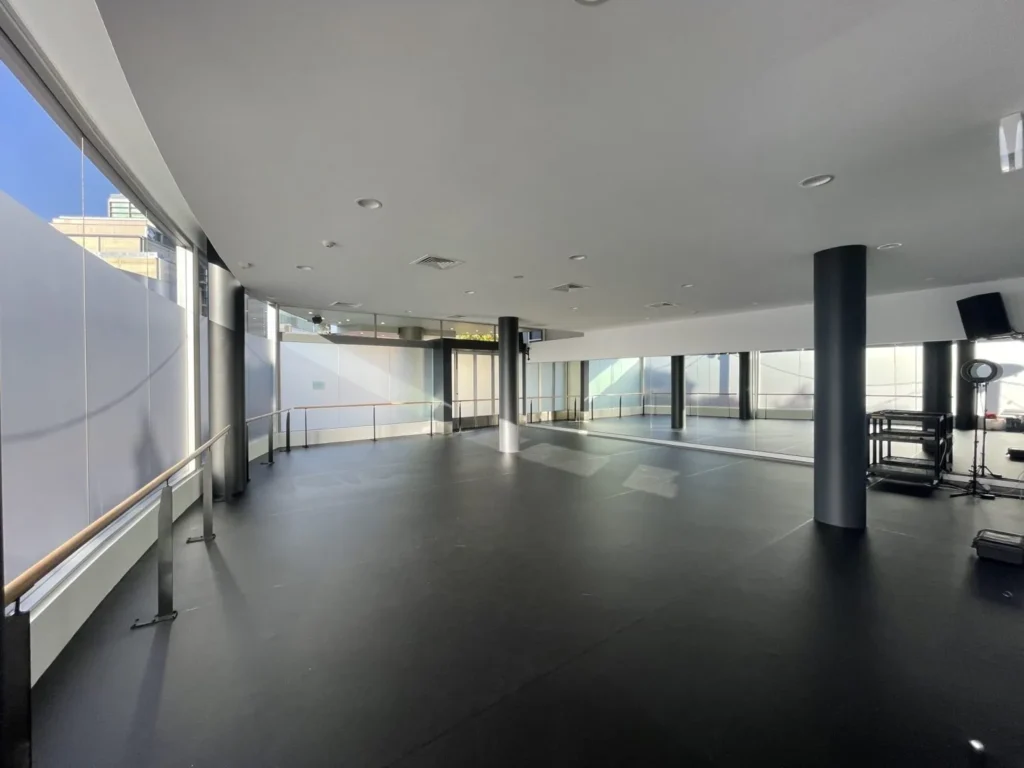
The heart and soul of a dance studio is the floor. STM’s floating sprung floor system suspends your dance surface above the hard existing floor on cushion pads. For New Zealand, STM ships the specialised components and the vinyl. You buy the ply and MDF from a local supplier, which keeps freight to a minimum.
Why it matters
Concrete is the enemy of the dancer.
Concrete floors and other solid surfaces have no resilience. They are an invitation to ankle, knee and hip injury and can permanently damage growing bodies. Insufficient shock absorption causes activity-related injuries; correct shock absorption reduces fatigue, significantly reduces the potential for shin splints and other common injuries, reduces the strain from rotating and pivoting movements and, with the correct top layer, improves foot stability and reduces rollover.
Correcting this is usually expensive. STM’s system was designed to reduce the financial outlay as far as possible while still giving dancers an appropriate surface.
Why the STM floor
- Deliberately has no screws or nails that can work up into your vinyl
- Salvageable and portable: take it with you when you move premises
- Roll back the vinyl and it works for tap with no loss of sound quality
- Minimises freight on materials and maximises your time and labour
- Shock absorption and force reduction tested to EN 14808
- Fire hazard properties tested to AS ISO 9239.1-2003
How it goes together
Five layers, floating on cushions.
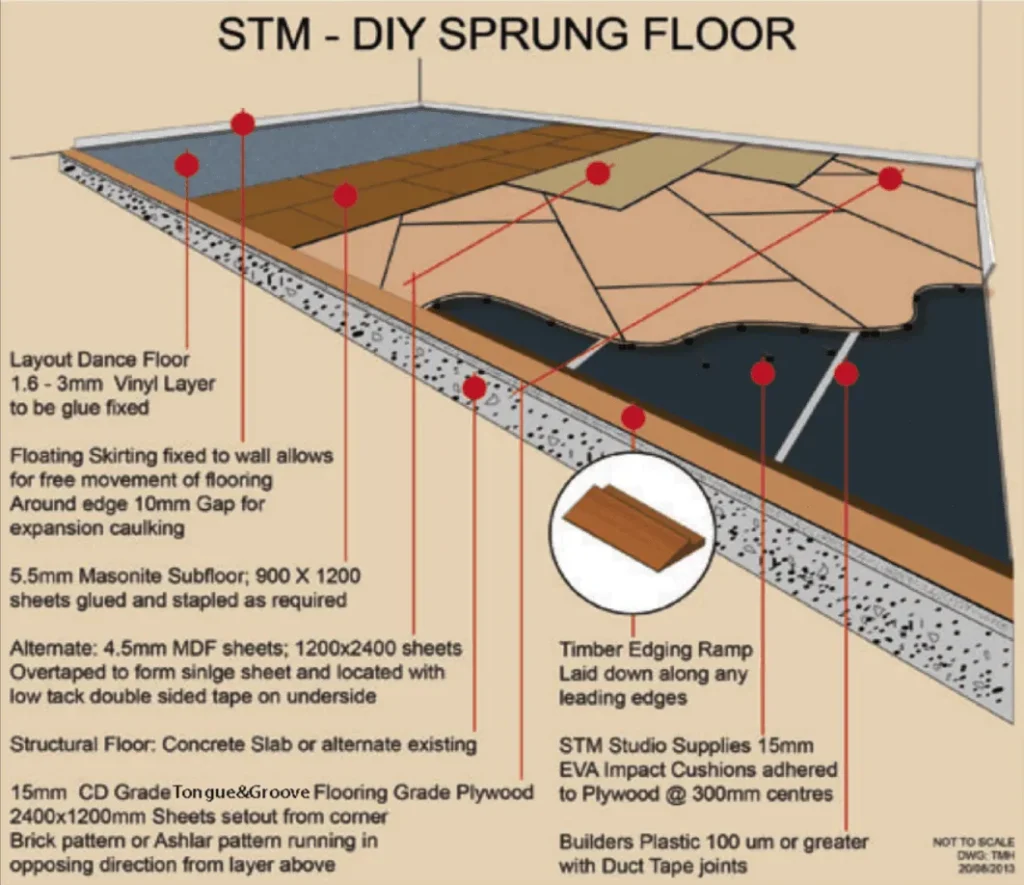
- Moisture barrierPlace and tape builder’s plastic over the existing hard floor.
- Perimeter battensFix a skirting of edge battens around the room, or fit ramped edging at leading edges to reduce the trip factor.
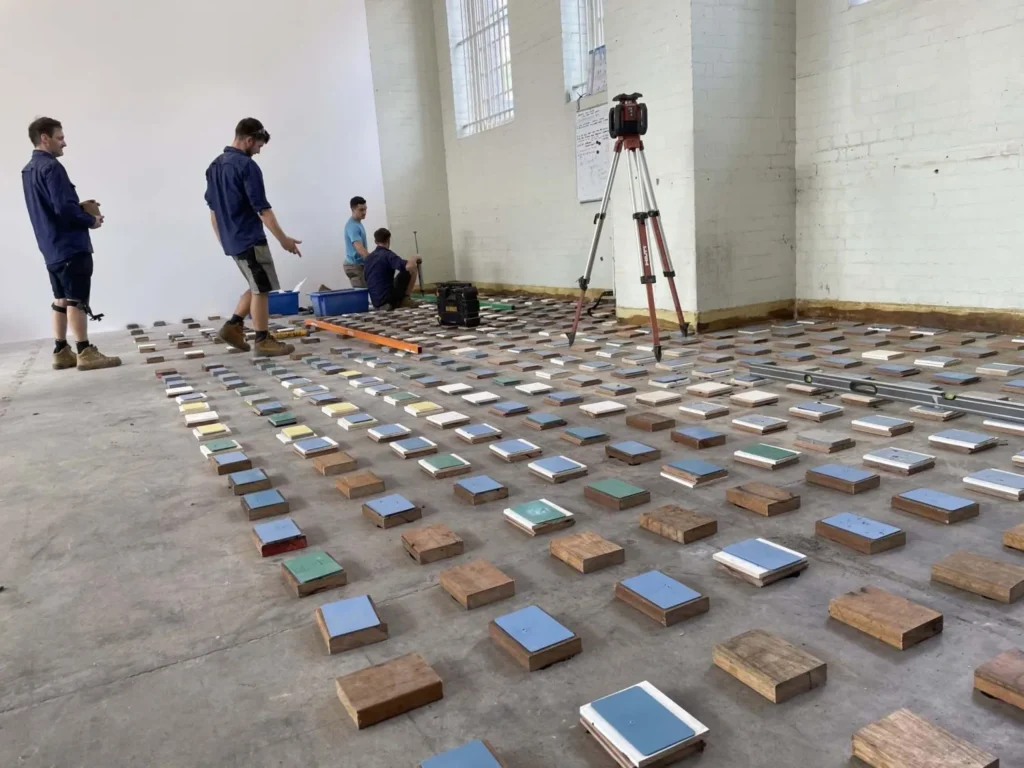
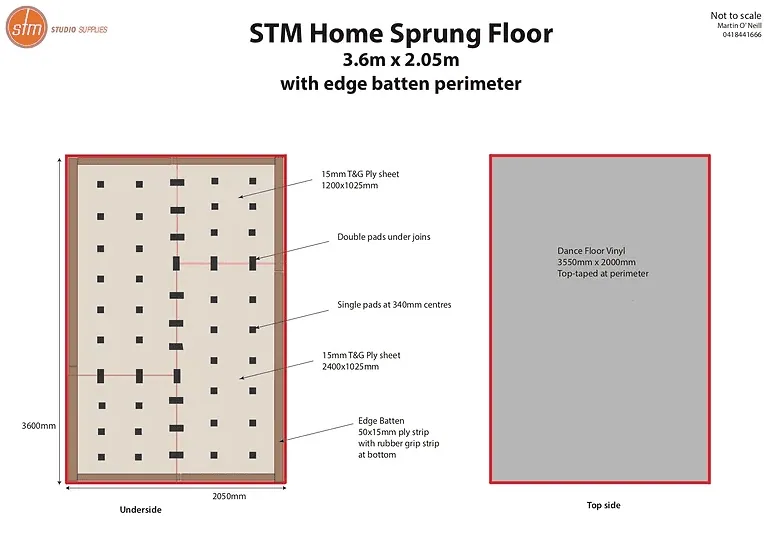
- Cushioned plyGlue the EVA pads to the underside of 15 mm flooring-grade tongue-and-groove ply at 300 mm centres using STM’s template, then lay the ply.
- Secondary layerLay 4.75 to 5 mm MDF or HDF across the ply in the opposite direction, fixed with pressure-sensitive adhesive. For a permanently glued vinyl, use Masonite instead.
- Dance surfaceLay your choice of dance vinyl, semi-permanently with double-sided tape or permanently adhered, or finish with JuJu performance clear coat.
The DIY kit
What STM ships, and what you buy in New Zealand.
Bunnings-style outlets and local timber merchants often offer cutting and delivery. STM’s quote includes advice on quantities for your room.
STM supplies
- 60 × 60 × 15 mm and 120 × 60 × 15 mm floor cushion pads
- Pad layout template
- Slot cutter set and additional tongues for short joins
- Joining tape and double-sided tape
- Installation instructions
- EveryDance, Broadway or the dance vinyl of your choosing
- Advice on costs and quantities of the materials you source locally
You source locally
- Builder’s plastic underlay
- 15 mm tongue-and-groove CD-grade ply sheets, 2400 × 1200 mm
- 50 × 15 mm edge batten timber (can be cut from ply)
- 5 mm MDF or HDF boards, or Masonite for a permanently glued vinyl
- Ramped edging (optional)
- Tools and labour
Sprung floor questions
Before you build.
Why do I need a sprung floor instead of dancing on concrete?
Concrete and other solid surfaces offer no resilience or shock absorption, which can lead to ankle, knee and hip injury and puts strain on growing bodies. Correct shock absorption from a sprung floor reduces fatigue and the potential for shin splints and other common dance injuries. STM will not supply dance vinyl to be laid directly on concrete.
What is in the DIY kit, exactly?
Floor pads in two sizes, a pad layout template, a slot cutter set, additional tongues for short joins, joining and double-sided tape, installation instructions and your choice of dance vinyl. You source ply, edge battens, MDF or HDF, builder’s plastic and optional ramped edging locally.
Can I take the floor with me if I move studios?
Yes. Because it is a floating floor with minimal screws or nails, loose or semi-permanently laid vinyl can be lifted and rolled for storage, and the majority of the floor (excluding the MDF layer) can be salvaged and reinstalled.
Has the floor been tested?
Shock absorption and force reduction have been tested to EN 14808. Fire hazard properties have been tested to Australian Standard AS ISO 9239.1-2003. Ask us for the test documentation if your certifier or building authority requires it.
Why is the DIY kit a good fit for New Zealand?
The heavy sheet materials are bought locally, so only the specialised components and the vinyl cross the Tasman. That keeps freight down and is why STM’s system has been the most affordable sprung dance floor available in New Zealand.
What should I send for a quote?
Room length and width, the existing floor construction (concrete slab, timber, other), the dance styles taught including any tap or hard-shoe work, your preferred vinyl or colour, and whether there is a forklift or loading dock at delivery. Photos help.